

Intervista esclusiva a Jon Salazar, fondatore e a.d. di Gazelle Wind Power, che sta rivoluzionando il settore dell’eolico offshore galleggiante. “Crediamo ci sia un’opportunità per lo sviluppo di partnerships con le filiere locali”
Gazelle Wind Power Limited (Gazelle) è stata fondata nel 2020, “per accelerare la transizione verso le energie rinnovabili, introducendo la prossima generazione di piattaforme eoliche offshore avanzate”, sottolinea il sito istituzionale.
Una storia di successo
Sede centrale a Dublino, Irlanda, Gazelle ha altre sedi in Portogallo, Spagna e Inghilterra (Regno Unito), a Reading, dove sono nate le famose “strisce climatiche” di Ed Hawkins.
Ad oggi, Gazelle ha raccolto 18,6 milioni di dollari in capitale e finanziamenti in tre round. Tra gli investitori figurano angels e investitori leader nella transizione energetica, come Valentin de Torres-Solanot del Pino, Peter Murphy e Zach Mecelis (co-fondatori di Covalis Capital), rispettivamente. Tra i finanziatori istituzionali figurano IGE investments, E2IN2, Portugal Ventures e l’acceleratore norvegese Katapult Ocean; tra gli investitori industriali e strategici, Wah Kwong Maritime Transport Holdings, una delle più grandi e antiche compagnie di navigazione di Hong Kong.
Attualmente la compagnia è in fase di term sheet per un finanziamento a titolo di capitale di 36 milioni di dollari, con un importante investitore strategico globale. Allo stesso tempo, l’azienda sta anche cercando di ottenere importanti finanziamenti dall’Unione Europea.
Gazelle ha una famiglia di brevetti più che decuplicata e nello scorso Dicembre ha acquisito una partecipazione di maggioranza nella spagnola Faustino Carceller, società di consulenza in architettura e ingegneria navale. Dopo aver intrapreso studi ingegneristici per l’integrazione di turbine da 15 MW sulla sua tecnologia di piattaforma, Gazelle è stata selezionata da un importante produttore di turbine in quanto il suo progetto soddisfa i loro rigorosi criteri.
Una lunga serie di premi e riconoscimenti in questi anni, per la propria tecnologia di piattaforme eoliche offshore galleggianti: Platts Global Energy Awards 2021 Finalist (sezione Compagnia Astro nascente e sezione Tecnologia Emergente dell’anno), Get in the ring 2022 Global Winner (sezione Energia offshore), Platts Global Energy Awards 2022 Finalist (sezione Compagnia Astro nascente); Start Us insights Startup-to-watch 2023 (sezione Energia rinnovabile), EU Startups Startup-to-watch 2023 (sezione Irlanda), EDF Pulse Ventures Start up-to-follow 2023 (sezione Design galleggiante), Extreme Tech Challenge 2023 (sezione Energia offshore), Platts Global Energy Awards 2023 Finalist (sezione Tecnologia per la Transizione energetica dell’anno).
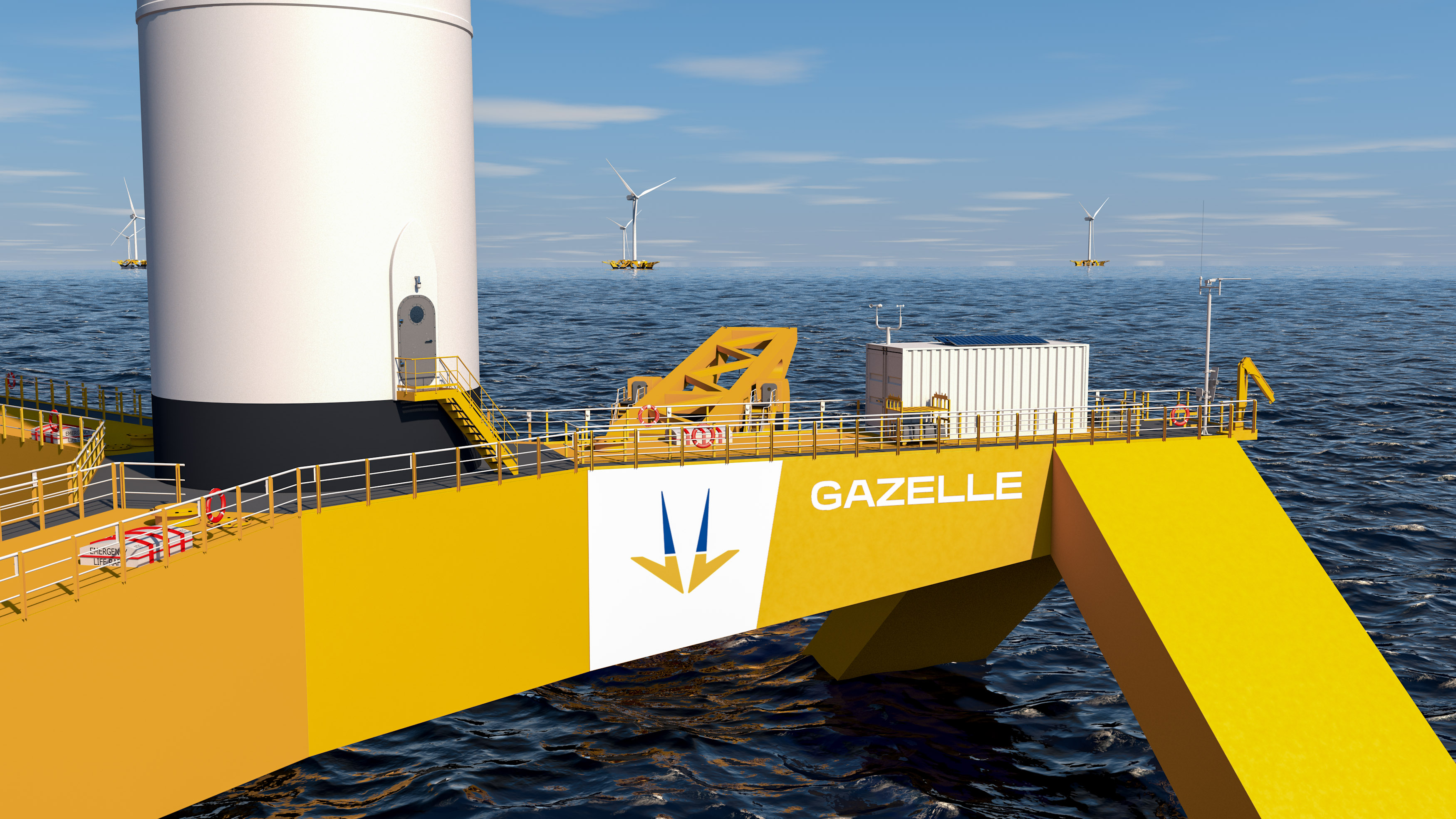
Ingegner Salazar, da quanto precede si può dire che la storia di Gazelle sia già oggi una storia di successo. Ma l’impressione è che Gazelle abbia ancora molto da far vedere: è così?
JS: Gazelle sta offrendo una rivoluzione nel design delle piattaforme galleggianti che ridurrà i costi e consentirà una rapida diffusione di questa importantissima fonte di energia rinnovabile. Stiamo inoltre progettando di utilizzare le infrastrutture locali esistenti per la produzione e l’installazione della tecnologia. È chiaro che siamo solo all’inizio del nostro percorso di crescita. Questo è solo il primo capitolo di un grande romanzo emergente.
Qualche giorno fa, Via col Vento ha parlato, riportando i concetti illustrati dal dottor Adrian Haworth, di come Gazelle può cambiare il settore dell’eolico offshore galleggiante con le sue piattaforme, con tecnologia mutuata dal settore navale e marittimo e non dall’oil & gas. Dei suoi vantaggi in termini di materie prime impiegate nella realizzazione, di costi e di facilitazioni di tipo logistico nell’allestimento. Vuole aggiungere altre informazioni?
JS: Le piattaforme eoliche offshore galleggianti devono essere prodotte in grandi quantità e a basso costo. I grandi progetti su misura tradizionalmente utilizzati per l’esplorazione e la produzione di petrolio e gas non sono applicabili in questo settore. Gazelle ritiene che le risorse e le competenze necessarie per ottenere una produzione di massa siano disponibili nell’industria navale e i nostri progettisti stanno collaborando con alcuni dei maggiori costruttori mondiali per sfruttare queste competenze e risolvere i problemi di costo e consegna.
Le piattaforme Gazelle saranno utilizzate nel progetto Eolico Offshore Molise, il principale in Italia per capacità installata di quanto a oggi sia noto, per il quale sono state appositamente sviluppate per la Maverick srl. Può darci qualche dettaglio? Cosa pensa di questo progetto?
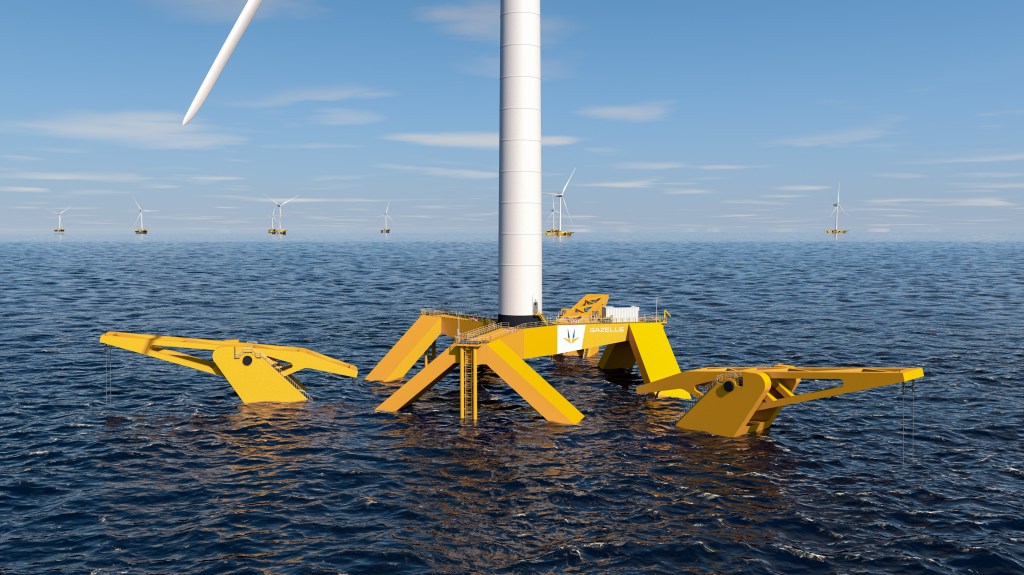
JS: Il progetto “Eolico Offshore Molise”, è situato nel Mare Adriatico al largo delle coste della regione Molise, comprende 70 turbine eoliche Vestas da 15 MW per una capacità totale di 1,05 GW. Le turbine saranno posizionate in acque con una profondità minima di 88 metri e massima di 126 metri e raggiungeranno un’altezza di 140 metri con un diametro del rotore di 236 metri. Il progetto della piattaforma Gazelle offre la capacità di installare a queste profondità d’acqua, soddisfacendo al contempo i requisiti di stabilità per i generatori di turbine eoliche di grandi dimensioni. L’approccio modulare e le procedure di installazione ridurranno al minimo la necessità di nuove infrastrutture e navi.
Riteniamo che il progetto di Maverick costituirà la base per molti altri progetti offshore galleggianti di grandi dimensioni, che aiuteranno l’UE a raggiungere i suoi obiettivi “net zero” per il 2050.
L’estate dello scorso anno, la Wah Kwong Maritime Transport Holdings, una delle più grandi e antiche compagnie di navigazione di Hong Kong ha investito una somma non divulgata in Gazelle Wind Power. Si tratta del primo investimento di questo tipo effettuato da Wah Kwong nel settore delle energie rinnovabili ha rivelato il presidente Hing Chao, il cui nonno fondò la compagnia di navigazione nel 1952, in un’intervista a margine della Forbes Global CEO Conference il mese scorso a Singapore. Chao, è anche presidente del comitato per la decarbonizzazione asiatica del gruppo italiano di certificazione RINA.
Ingegner Salazar, può rivelarci qual è stato l’investimento della Wah Kwong in Gazelle? Inoltre, questo investimento può rappresentare uno sbocco importante delle attività di Gazelle verso i mercati cinesi, attualmente i principali in termni di nuova capacità rinnovabile installata?
JS: L’investimento di Wah Kwong in Gazelle, sebbene i dettagli siano riservati alla divulgazione interna, rappresenta un passo significativo nella nostra strategia di industrializzazione.
Chiaramente, essendo un importante costruttore navale e posizionato strategicamente a Hong Kong, potrebbe essere un facilitatore per la crescita non solo in Cina ma in tutta la regione dell’Estremo Oriente, dove c’è un interesse significativo per l’eolico offshore galleggiante.
Poiché stiamo progettando la nostra soluzione in modo che sia agnostica rispetto ai generatori di turbine eoliche, stiamo già discutendo con i fornitori cinesi di WTG e continueremo a esplorare le opportunità man mano che il mercato matura.
A proposito di strategie future, quali sono quelle di Gazelle, consolidamento delle attuali o ha già in programma strategie espansive? Se sì, su quali linee, in particolare in Europa e in Italia?

JS: La società sta invero valutando strategie di crescita esterna per sfruttare le opportunità della regione. La decisione non sarà guidata solo dalle nostre aspirazioni di crescita, ma anche dall’obiettivo di servire meglio i nostri clienti. Pertanto, acquisizioni, alleanze strategiche e joint ventures sono tutti elementi in discussione. Gazelle è attualmente concentrata nel garantire che i progetti della sua piattaforma siano disponibili per gli sviluppatori a livello globale, ma ha un’attenzione particolare per l’Italia e l’Europa, che hanno i progetti più avanzati.
Inizialmente Gazelle fornirà licenze di progettazione e riteniamo che vi sia l’opportunità di sviluppare partnership con le catene di fornitura locali per aumentare la portata della piattaforma e dei sistemi di ormeggio.
Chiudiamo dove abbiamo iniziato: i numeri. Quest’anno Gazelle Wind Power Limited chiuderà il suo primo bilancio, se non erro: può anticiparci i principali indicatori economico, finanziari e patrimoniali?
JS: Gazelle ha visto uno sviluppo significativo dalla sua fondazione nel dicembre 2020. Abbiamo finanziato lo sviluppo fino al punto in cui abbiamo completato i test di bacino e ottenuto le certificazioni. Il prossimo passo è la costruzione e l’installazione del nostro progetto da 2 MW ad Aguçadoura, in Portogallo, e gli impegni di finanziamento per questo sono attualmente garantiti. Il lancio commerciale è previsto per il 2027, con successivi piani di crescita significativi. Attualmente abbiamo diversi progetti commerciali in fase di valutazione, oltre a quello del Molise, che garantiranno la trazione commerciale non appena saranno completati i test su scala reale. Con le previsioni di ricavi stabili, prevediamo che gli utili giustificheranno rapidamente la fiducia dei nostri investitori e garantiranno la crescita del valore per i decenni a venire.
Grazie per la disponibilità e l’entusiasmo che ha dimostrato per la nostra testata.
In bocca al lupo e…Via col Vento!
Foto e immagini: Gazelle Wind Power
– – – – –
Exclusive interview to Jon Salazar, Founder and CEO of Gazelle Wind Power, which is revolutionising the floating offshore wind sector
Gazelle Wind Power Limited (Gazelle) was founded in 2020 “to accelerate the transition to renewable energy by introducing the next generation of advanced offshore wind platforms,” the company website points out.
A success story
Founded in 2020 with HQ registered in Dublin, Ireland, and with registered offices now in Portugal, Spain and Reading, England (UK), where Ed Hawkins’ famous ‘climate stripes’ originated.
To date, Gazelle has raised $18.6 million in equity and supplier finance over three rounds. Investors include angels and leading investors in the energy transition, such as Valentin de Torres-Solanot del Pino, and Peter Murphy and Zach Mecelis (co-founders of Covalis Capital), respectively. Institutional funders include IGE investments, E2IN2, Portugal Ventures and Norwegian accelerator, Katapult Ocean; Industrial and strategic investors include Wah Kwong Maritime Transport Holdings, one of Hong Kong’s largest and oldest shipping companies.
Currently the company is at term sheet stage for equity funding of $36 million, including a prominent global strategic investor. At the same time, they are also pursuing significant grant funding opportunities becoming available from the European Union.
Gazelle has over a tenfold family of patents under its belt and has acquired a majority stake in the Spanish naval architect and ship engineering consultancy Faustino Carceller in December 2022. After engaging in engineering studies for integrating 15MW turbines on its platform technology, Gazelle has been selected by a prominent turbine manufacturer as their design meets their strict criteria.
The Company has achieved a long string of awards in these years for its floating offshore wind platform technology: Platts Global Energy Awards 2021 Finalist (section Rising Star Company), Platts Global Energy Awards 2021 Finalist (section Emerging Technology of the Year), Get in the ring 2022 Global Winner (section Offshore Energy), Platts Global Energy Awards 2022 Finalist (section Rising Star Company and Chief Executive of the Year Trailblazer); Start Us insights Startup-to-watch 2023 (section Renewable Energy), EU Startups Startup-to-watch 2023 (section Ireland), EDF Pulse Ventures Start-up-to-follow 2023 (section Floating Design), Extreme Tech Challenge 2023 (section Offshore Energy), Platts Global Energy Awards 2023 Finalist (Energy Transition Technology of the Year).
Mr. Salazar, from the above, one can say that the Gazelle story is already a success. But the impression is that Gazelle still has a lot to show: is that so?
JS: Gazelle is offering a revolution in floating platform design which will reduce the cost and enable the speed of deployment of this very important renewable energy source. We are also designing to utilise existing local infrastructure for the manufacture and installation of the technology. Clearly then we are just at the beginning of our growth path. This is only chapter one of a large emerging novel.
A few days ago, Via col Vento talked about how Gazelle, as illustrated by Adrian Haworth, can change the floating offshore wind sector with its platforms, with technology borrowed from the naval and maritime sector and not from oil & gas. One of its advantages relates to the raw materials used in construction, costs, and logistical facilities used in construction and assembly. Would you like to add any more information?
JS: Floating offshore wind platforms need to be manufactured cheaply in large numbers. The large bespoke designs traditionally employed in oil and gas exploration and production are not applicable in this space. Gazelle believes the resources and skillsets to achieve mass manufacture are available from the ship building industry, and our designers are working with some of the largest global fabricators to deploy these skills to solve the cost and delivery issues.
The Gazelle platforms will be used in the Molise Offshore Wind Farm, the largest in Italy in terms of installed capacity to date, for which they were specially developed for Maverick srl. Can you give us some details? What are your thoughts on this project?
JS: The ‘Molise Offshore Wind Farm’ project, located in the Adriatic Sea off the Molise region coast, includes 70 x 15MW Vestas wind turbines for a total capacity of 1.05 GW. The turbines will be located in waters spanning depths of a minimum of 88 metres and a maximum of 126 metres and attain a height of 140 metres with a rotor diameter of 236 metres.
Gazelle’s platform design provides the capability to install at these water depths whilst satisfying the stability requirement for the very large wind turbine generators. The modular approach and installation procedures will minimise the needs for new infrastructure and vessels.
We believe Maverick’s project will provide the basis for many more large floating offshore projects assisting the EU to meet its 2050 net zero goals.
Last summer, Wah Kwong Maritime Transport Holdings, one of Hong Kong’s largest and oldest shipping companies, invested an undisclosed sum in Gazelle Wind Power. This is the first investment of its kind by Wah Kwong in the renewable energy sector, revealed by chairman Hing Chao, whose grandfather founded the shipping company in 1952, in an interview on the sidelines of the Forbes Global CEO Conference last month in Singapore. Chao is also chairman of the Asian decarbonisation committee of the Italian certification group RINA.
Mr. Salazar, can you tell us what was Wah Kwong’s investment in Gazelle? Also, can this investment represent an important outlet for Gazelle’s activities towards the Chinese markets, currently the main ones in terms of new installed renewable capacity?
JS: Wah Kwong’s investment in Gazelle, while specifics are reserved for internal disclosure, represents a significant step in our industrialisation strategy.
Clearly, as a major ship builder and being strategically positioned in Hong Kong, they could be a facilitator for growth not only in China but the whole Far Eastern region, where there is significant interest in floating offshore wind.
As we are designing our solution to be wind turbine generator agnostic, we are already in discussions with Chinese WTG suppliers and will continue to explore opportunities as the market matures.
Talking about future strategies, what are Gazelle’s strategies, consolidation of current ones or do you already have expansion strategies planned? If so, along which lines, particularly in Europe and Italy?
JS: The company is indeed considering external growth strategies to capitalise on opportunities in the region. The decision will not only be driven by our growth aspirations but also by our objective to serve our clients better. Therefore, acquisitions, strategic alliances, and JVs are all on the table for discussion.
Gazelle is currently focused on ensuring its platform designs are available to developers globally but has a particular focus on Italy and Europe because they have the most advanced projects.
Gazelle initially will provide design licenses, and we believe there is an opportunity to develop partnerships with the local supply chains to provide increased scope for the platform and mooring systems.
Let’s close where we started: the numbers. This year Gazelle Wind Power Limited will close its first financial year, if I am not wrong: can you anticipate the main economic, financial and balance sheet indicators?
JS: Gazelle has seen significant development since our founding in Dec 2020. We have funded development to the point where we now have basin tests complete and certifications in hand. The next step is to build and install our 2MW project in Aguçadoura, Portugal, and funding commitments for what is currently secured.
Commercial deployment is expected in 2027 with significant growth plans afterwards. We currently have several commercial projects under evaluation beyond the Molise project, ensuring commercial traction as soon as full-scale testing is complete. With projections for revenues holding firm, we expect earnings will quickly justify our investors’ confidence and ensure value growth for decades to come.
Thank you for your willingness and attention. So, good luck and… Go with the Wind!
Ph & images credits: Gazelle Wind Power


Lascia un commento